Statement by the Deputy Minister of Foreign Affairs of Belarus I.Sekreta following the joint final session with the participation of delegations from OSCE member states and representatives of civil society (1 August 2025, Helsinki)
To continue the conversation about the future of the OSCE, we propose to shift our discussion slightly and try to focus on the main issue.
The future of the OSCE, whose value lies in consensus, no longer depends on resolving the budget issue or determining the rotating chairmanship.
The future of the OSCE will only be secured when participating states begin to view the Organisation not as a platform for venting their grievances, but first and foremost as a practical tool for improving inter-state cooperation on the continent, a tool for moving forward, a tool for dialogue.
At the moment, the OSCE mechanism is not just running idle, but is actually doing harm.
If we want the situation to improve, we need to change our thinking, seriously study the historical causes and effects, and try to understand how the European security and cooperation system actually collapsed. This did not happen in 2022.
Just like 50 years ago, we are once again facing the risk of a major war in Europe.
But the OSCE will not bring or preserve peace and mutual understanding against the common will of the participating states. There is no longer a common will in the OSCE. There is much talk about values and principles, but there is no longer a common understanding of a common goal and common values.
Today, unfortunately, Europe is driven by a self-imposed prophecy of war.
However, in the OSCE, we continue to talk a lot, but we hardly listen.
If the most we are capable of is a tug-of-war of mutual accusations, which we see every week at the Hofburg, then we will achieve nothing.
But if we can rise above ideological dogmas and prejudices, then we can bring peace to Europe.
How? By resorting to diplomacy once again.
To overcome the barrier to dialogue, we would like to clarify the situation: the cessation of hostilities and a new détente in Europe will be a consequence, not a prerequisite, of improved international relations.
How can we move to this advanced stage of international cooperation?
We could do so by acknowledging the obvious and then agreeing on a future security mechanism in Eurasia.
Of course, the definition of "obvious" varies greatly on different sides of the Bug River. To overcome this gap in understanding, if government officials are still not ready for rapprochement for some reason, we could entrust our respected analysts, scientists and journalists to start a dialogue.
Belarus is ready to participate in this dialogue anywhere. Without any preconditions or demands.
To help the entire community move forward, we will be happy to dedicate our traditional Minsk Conference on Eurasian Security, which will be held on 28–29 October this year, to this goal. After all, Belarus, which has been at the geopolitical crossroads for so many years, is the best platform for dialogue, as well as for developing solutions to regional conflicts. Come and let's talk. The result will be a good basis for the upcoming Swiss chairmanship of the OSCE.
We also believe that the Swiss OSCE Chairmanship is best prepared – in terms of mandate and authority – for such discussions.
It just needs to happen sooner.
If one side drags its feet for too long, hoping to defeat the other on the battlefield or strangle it economically, our continent faces a truly bleak future.
Belarus believes that we could send a much more optimistic signal to the world on the 50th anniversary of the OSCE.

Выступление Министра М.Рыженкова на открытых дебатах Совета Безопасности ООН // Statement by Minister M.Ryzhenkov at the open debate of the UN Security Council
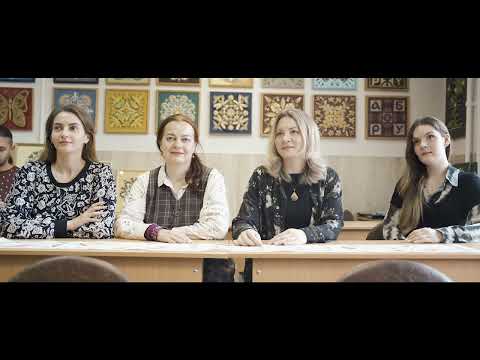
Belarusian Vytsinanka has been inscribed on the UNESCO Representative List of Intangible Cultural Heritage
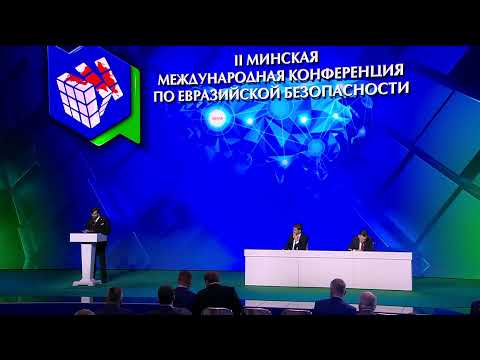
II Minsk International Conference on Eurasian Security
2023 in the history of Belarusian diplomacy
High-level International Conference on Eurasian Security
Statement by Foreign Minister Vladimir Makei at the 77th session of the UN General Assembly (September, 2022)


Official Internet Resources
President of the Republic of Belarus
www.president.gov.byCouncil of Ministers of the Republic of Belarus
www.government.gov.byCouncil of the Republic
www.sovrep.gov.byHouse of Representatives
www.house.gov.byNational Agency of Investment and Privatization
www.investinbelarus.byInternational ICT Forum TIBO
www.tibo.byNational Center of Legislation and Legal Information
www.center.gov.byNational Tourism Agency
www.belarustourism.byInformation export support website Export.by
www.export.byBelarusian Universal Commodity Exchange
www.butb.byBelarusian Chamber of Commerce and Industry
www.cci.byOfficial website of the Republic od Belarus
www.belarus.byBelarus TV
www.news.byRadio Belarus International
www.radiobelarus.byDipservice
www.dipservice.byBusiness network TradeBel
www.tradebel.comNational Academy of Science of Belarus
www.nasb.gov.byMinistry of Education of the Republic of Belarus
www.edu.gov.byMinistry of Natural Resources of the Republic of Belarus
www.minpriroda.gov.byMinistry of Health of the Republic of Belarus
www.minzdrav.gov.byMinistry of Economy of the Republic of Belarus
www.economy.gov.by