Statement by Mr. Denis Sidorenko, Deputy Permanent Representative of the Republic of Belarus to the OSCE, at the Meeting of the OSCE Permanent Council
16 February 2012Regarding the accession of European Union countries to the Anti-Counterfeiting Trade Agreement and draft legislation in the United States of America
16 February 2012
Mr. Chairperson,
Our delegation has taken note of the press release distributed on 14 February of this year by the OSCE Representative on Freedom of the Media, in which Ms. Mijatović expressed concern regarding the possible consequences of the accession of European Union (EU) countries to the international Anti-Counterfeiting Trade Agreement (ACTA).
According to Ms. Mijatović, the aforementioned agreement may have a detrimental effect on freedom of expression and a free flow of information and also on ensuring the right to privacy.
While not denying the importance of protecting copyright, we agree with the Representative that there is a need for a serious discussion and thorough assessment of this international document from the point of view of whether due account is taken of human rights and fundamental freedoms.
As we understand it, two British universities (the London Metropolitan University and the University of Oxford) have already conducted independent studies of the consequences of ACTA’s application for communications, especially the Internet. According to experts, this agreement is not compatible with guaranteeing the right to a fair trial in accordance with the European Convention on the Protection of Human Rights and the European Charter of Fundamental Rights and undermines the principle of the rule of law. The aforementioned studies also draw the conclusion that ACTA is fully and completely geared towards the protection of the interests of major corporations but does not contain the proper safeguards to protect the rights of Internet service providers and Internet users.
We note that the signing by 22 European Union member countries of this trade agreement has resulted in massive protests in Europe. We believe this is largely due to the fact that the work on ACTA was kept secret from the public for a long time.
We call on our European partners to carefully study all the aspects of ACTA’s application from the point of view of possible violation of international human rights commitments and basic freedoms, including OSCE commitments, prior to the ratification of the agreement by the parliaments of the EU countries and the European Parliament. We hope that the experts’ conclusions and recommendations will be taken into account in further discussion of accession to ACTA.
It is also important that the Office of the OSCE Representative on Freedom of the Media prepare a detailed expert evaluation of that agreement from the point of view of its conformity with OSCE human rights commitments and make specific recommendations. A special fact-finding visit by the Representative to the European agencies dealing with ACTA would be useful in this respect.
We believe that the Office for Democratic Institutions and Human Rights should also be involved in this work, since certain ACTA provisions directly affect the right to a fair trial.
Mr. Chairperson,
We should also like to point out that at the meeting of the OSCE Permanent Council on 19 January of this year our delegation already raised the question of the planned adoption in the United States of legislation affecting the freedom to disseminate information on the Internet, in particular the Stop Online Piracy Act and the Protect Intellectual Property Act.
Unfortunately, we have still not had any clarification on this matter from our American colleagues. We are concerned at reports regarding plans to continue the promotion of the aforementioned legislative initiatives, preserving the most contentious aspects connected with the potential violation of civil rights to freedom of information and expression and to privacy.
Our concern is further exacerbated by the fact that the relevant United States authorities already have considerable opportunities to monitor the Internet and block Internet resources without a court order.
We would be grateful to the United States delegation for clarification on this matter.
We also call on our American colleagues to avail themselves of the expert capabilities of the Office of the OSCE Representative on Freedom of the Media in revising the aforementioned draft legislation.
Thank you, Mr. Chairperson.


Выступление Министра М.Рыженкова на открытых дебатах Совета Безопасности ООН // Statement by Minister M.Ryzhenkov at the open debate of the UN Security Council
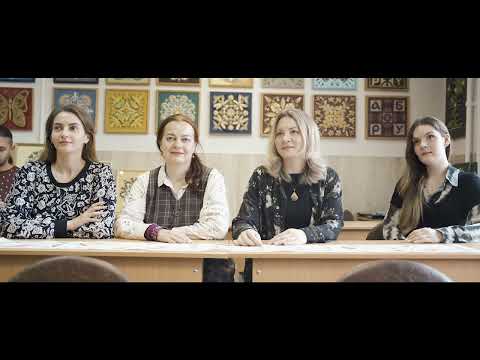
Belarusian Vytsinanka has been inscribed on the UNESCO Representative List of Intangible Cultural Heritage
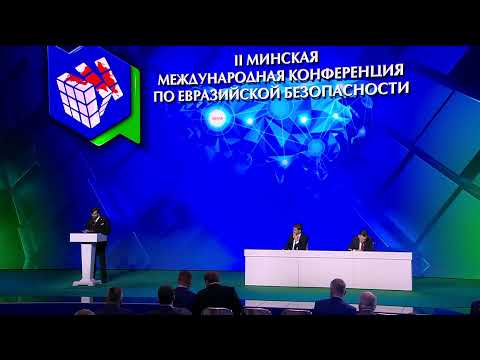
II Minsk International Conference on Eurasian Security
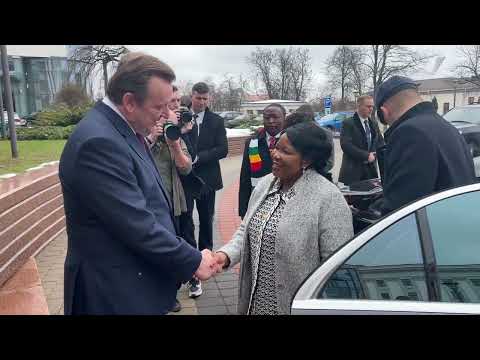
2023 in the history of Belarusian diplomacy
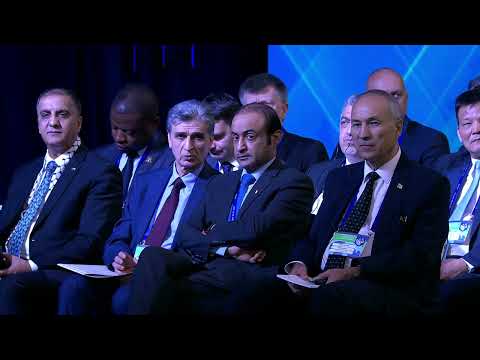
High-level International Conference on Eurasian Security
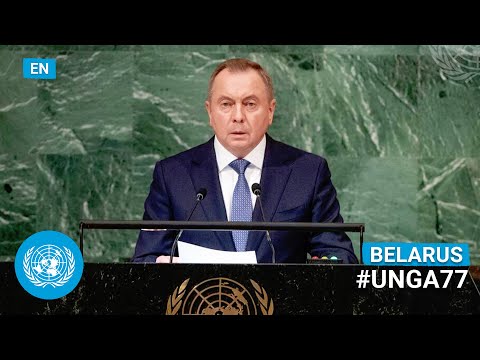
Statement by Foreign Minister Vladimir Makei at the 77th session of the UN General Assembly (September, 2022)


Official Internet Resources
President of the Republic of Belarus
www.president.gov.byCouncil of Ministers of the Republic of Belarus
www.government.gov.byCouncil of the Republic
www.sovrep.gov.byHouse of Representatives
www.house.gov.byNational Agency of Investment and Privatization
www.investinbelarus.byInternational ICT Forum TIBO
www.tibo.byNational Center of Legislation and Legal Information
www.center.gov.byNational Tourism Agency
www.belarustourism.byInformation export support website Export.by
www.export.byBelarusian Universal Commodity Exchange
www.butb.byBelarusian Chamber of Commerce and Industry
www.cci.byOfficial website of the Republic od Belarus
www.belarus.byBelarus TV
www.news.byRadio Belarus International
www.radiobelarus.byDipservice
www.dipservice.byBusiness network TradeBel
www.tradebel.comNational Academy of Science of Belarus
www.nasb.gov.byMinistry of Education of the Republic of Belarus
www.edu.gov.byMinistry of Natural Resources of the Republic of Belarus
www.minpriroda.gov.byMinistry of Health of the Republic of Belarus
www.minzdrav.gov.byMinistry of Economy of the Republic of Belarus
www.economy.gov.by